RJR Speeds US Contractor to Owner Transitions for FedEx Linehaul

A contractor to owner transition, whether it’s selling a FedEx linehaul TSP business or handing off a long-term chemical supply contract, works when the documentation is clean and the contract permits transfer. Start now: pull your incorporation papers, FedEx settlement history, insurance binders, DOT and driver files, and any chemical contract appendices, then contact your contract counterparty or a facilitator like RJR Worldwide Corp. The biggest risks sit in FedEx’s assignment rules, insurance gaps, and liabilities nobody wrote down.
TL;DR:
- Ensuring all documents are complete, especially legal formation papers, FedEx contracts, DOT records, and chemical appendices, is crucial before negotiations start.
- Confirm the FedEx contract explicitly permits assignment and that the buyer is prepared for FedEx’s vetting process before progressing past the letter of intent.
- Maintaining driver files, fleet documentation, and insurance coverage is vital during transition to prevent delays or business interruption.
- Most transaction stalls occur due to paperwork gaps, such as missing or unapproved liabilities, rather than valuation disagreements.
- Starting insurance and compliance preparations early, ideally within the same week as signing the LOI, significantly reduces closing delays.
Table of Contents
- What Are the Steps in a Contractor Ownership Transfer?
- How Does FedEx Contracting Affect Assignability?
- What Operational Steps Keep the Business Running During Handover?
- What Financial Records Determine Deal Value?
- How Long Does a Transition Take, and What Derails It?
- What Sellers and Buyers Should Expect From a Practiced Operator
- Ready to Start Your Transition?
- Sources
What Are the Steps in a Contractor Ownership Transfer?
A clean handover follows three phases: paperwork, deal terms, and operational cutover. Skip a phase and you’ll be fixing problems after close, when leverage has shifted.
Phase one: assemble your documents. Before you talk price, gather:
- Corporate formation documents (articles of incorporation, bylaws, cap table)
- FedEx contract and amendments, plus several months of settlement statements
- Driver files: relevant records such as CDL status, background checks, and drug and alcohol testing history
- Fleet titles, lease agreements, and maintenance logs
- DOT compliance records, including Hours of Service data and safety scores
- For chemical contracts: current Safety Data Sheets, Certificates of Analysis, and every contract appendix covering pricing formulas and volume commitments
Phase two: negotiate deal mechanics. The letter of intent should spell out price, structure (asset or stock sale), and a clear path to consent. Because FedEx does not mediate buyer-seller negotiations, you’re on your own to confirm assignability early, not after you’ve spent months in diligence. Escrow holdbacks tied to settlement continuity protect both sides if revenue dips during the switch. Phased closings, where operational control transfers before full financial settlement, work well for linehaul routes with driver retention risk.
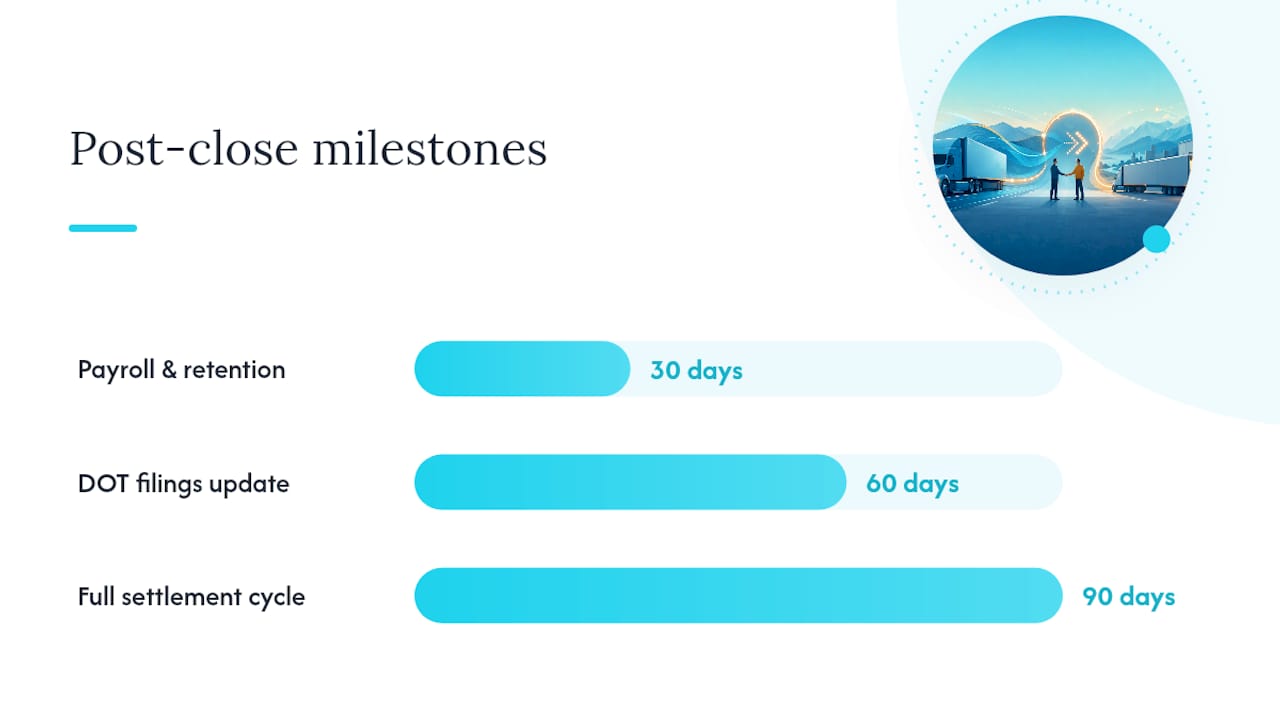
Phase three: close and stabilize. On closing day, confirm who signs the assignment paperwork (usually the outgoing Authorized Officer and the buyer’s designated officer), transfer insurance certificates, and notify FedEx dispatch of the change. In the first 30 days, focus on payroll continuity and driver retention. By day 60, confirm DOT filings reflect the new operating entity. By day 90, you should have a full settlement cycle under the new owner to confirm pricing and volume held steady.
Pro Tip: Notify shippers and chemical suppliers about the ownership change only after the assignment is legally executed. Early notice without a signed agreement invites customers to shop around before the deal closes.
How Does FedEx Contracting Affect Assignability?
FedEx Ground requires every service provider to operate as an incorporated for-profit corporation, and it designates an Authorized Officer as the point of contact for all contractual and operational matters. A buyer who plans to run the business as a sole proprietorship or a bare-bones LLC will hit a wall immediately. Bizbe’s contractor guidance treats forming a C-Corp or S-Corp as a non-negotiable prerequisite, not a paperwork afterthought.
FedEx runs an Assignee Marketplace and a Service Provider Solutions function, but understand what that actually means: FedEx may pass along contact information for interested prospective buyers, and it offers guidance on the contracting process. It does not negotiate price, structure the deal, or vouch for either party.
Before you progress past a signed LOI, confirm:
- The contract’s assignment clause explicitly permits transfer with FedEx consent
- No pending performance issues would give FedEx grounds to deny the transfer
- The buyer’s Authorized Officer is prepared to complete FedEx’s vetting process
- Whether you’re structuring an asset sale (cleaner liability separation) or a stock sale (preserves the existing FedEx relationship without a fresh application)
TSP linehaul contracts and ISP local delivery contracts carry different underlying requirements. TSP operations center on Class A CDL drivers, semi-tractors, and long-haul fleet maintenance, which changes what a buyer needs to staff and insure on day one.
What Operational Steps Keep the Business Running During Handover?
Revenue continuity depends on drivers staying put and equipment staying compliant. Losing three drivers in the first month because payroll got delayed can undo a good acquisition price fast.
- Transfer driver files intact: CDL status, background checks, and testing history need to move with the business, not get recreated
- Offer retention incentives for the first 90 days; drivers who feel uncertain about a new owner start looking elsewhere
- Inspect the fleet before close and confirm title or lease assignment paperwork is filed with the new entity
- Re-file operating authority, IFTA, and IRP registrations under the new corporate name
- Enroll in a drug and alcohol testing consortium if the buyer doesn’t already have one
Insurance is often the single item that stalls a closing. A buyer needs proof of coverage in place before FedEx will approve the transfer, and binding new trucking insurance can take longer than sellers expect. Diamondback’s guide to new venture truck insurance walks through the coverage types and lead times involved, and getting a specialist involved early avoids a last-minute scramble.
Pro Tip: Start your insurance quote process the same week you sign the LOI, not after diligence wraps. Coverage approval timelines rarely match deal timelines, and this gap kills more closings than any legal issue does.
What Financial Records Determine Deal Value?
Buyers price these deals on documented, predictable revenue, not projections. A linehaul business with three years of clean settlement statements is worth more than one with a strong story and thin paperwork.
Verify before you negotiate price:
- Settlement statements covering 12 to 36 months, showing revenue trends and any volatility tied to fuel surcharges or route changes
- Maintenance and capital expenditure records, since deferred maintenance is a hidden liability that shows up right after close
- Outstanding liabilities: equipment loans, lease encumbrances, unpaid claims, and pending litigation
- For chemical supply contracts, whether pricing is index-linked; index-linked pricing tied to a transparent formula and complete supporting documentation makes revenue far more predictable than fixed pricing that’s due for renegotiation
Valuation mechanics typically start from a multiple of trailing settlement revenue, then get adjusted for working capital needs, unresolved claims, and any escrow held back for post-close representations. Buyers should negotiate reps and warranties covering undisclosed liabilities, an escrow holdback of a portion of the purchase price for a defined survival period, and, where possible, phased payments tied to hitting operational KPIs like on-time delivery rates or safety scores during the first two quarters.
How Long Does a Transition Take, and What Derails It?
Most linehaul and chemical contract transitions typically take several months from signed LOI to full operational handover, longer if FedEx consent or supplier approval gets delayed.
- Weeks 1 to 4: Document collection and initial diligence
- Weeks 4 to 10: Negotiation, contract review, and FedEx or supplier consent process
- Weeks 10 to 16: Insurance binding, driver and fleet transfer prep, regulatory filings
- Weeks 16 to 26: Closing and the 30/60/90-day operational stabilization window
The deals that stall almost always share the same problems: noncompliant drivers or equipment discovered late, insurance that isn’t bindable in time, missing settlement records, an anti-assignment clause nobody flagged early, or liabilities the seller didn’t disclose. The fix is front-loading evidence requirements. Require proof of clean DOT records and bindable insurance before you schedule a closing date, and use conditional closings with escrow so a surprise liability doesn’t become the buyer’s sole problem after the fact.
What Sellers and Buyers Should Expect From a Practiced Operator
Most owners underestimate how much friction comes from things that have nothing to do with price: a driver roster nobody documented properly, a chemical contract appendix that got amended verbally and never on paper, an insurance binder that expired mid-negotiation. Deals don’t fall apart over valuation disagreements as often as people assume. They fall apart over paperwork gaps that surface too late to fix cleanly.
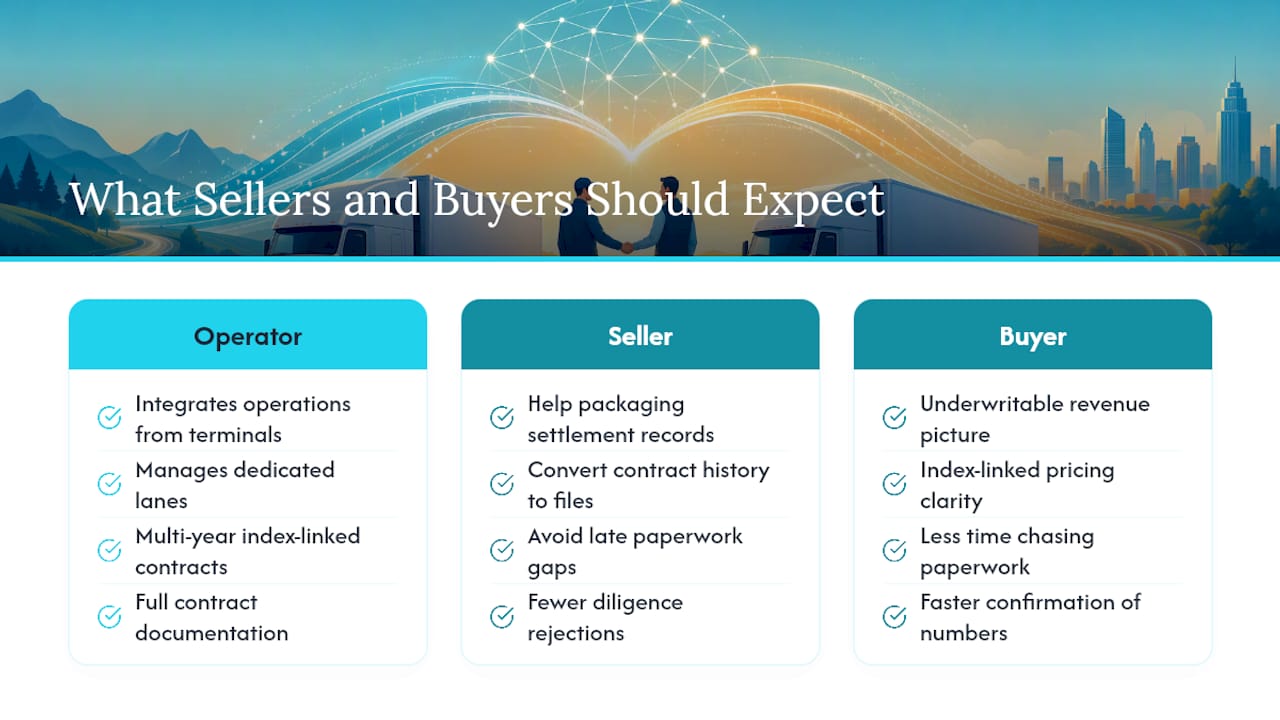
RJR Worldwide Corp. runs its FedEx linehaul acquisitions directly from California terminals, managing dedicated lanes and integrating operations rather than treating a purchase as a one-time transaction. On the chemical sourcing side, our multi-year contracts use index-linked pricing with full documentation, which gives a buyer stepping into that agreement a revenue picture they can actually underwrite. For sellers, that means help packaging settlement records and contract history into a form a buyer’s diligence team won’t kick back. For buyers, it means less time chasing paperwork and more time confirming the numbers hold up.
— RJR Worldwide
Ready to Start Your Transition?
If you’re sitting on a FedEx linehaul business you want to sell, or you supply industrial chemicals under a contract that’s approaching renewal, the fastest path forward is working with a buyer who already understands the compliance and documentation demands. RJR Worldwide Corp. acquires linehaul operations directly, meaning no broker chain slowing down consent or diligence, and structures chemical supply agreements with index-linked pricing and complete documentation so both sides know exactly what they’re signing.
Before reaching out, have your settlement statements, incorporation documents, driver and fleet files, and any chemical contract appendices organized. That single step shortens the timeline more than anything else in this process. Visit the chemical sourcing division to discuss a supply contract transition, or connect with our linehaul acquisitions team to start a conversation about selling your FedEx business with settlement continuity and regulatory compliance built into the handover.
Sources
- BuildAGroundBiz: Frequently Asked Questions
- FedEx Ground Contractor Requirements Your 2026 Guide | Bizbe