Cost Plus vs Index Pricing: A Contractor’s Guide

For projects with unknown scope or high discovery risk, cost-plus with a guaranteed maximum price (GMP) cap is the safer structure. For well-defined, repetitive work, fixed-price wins on simplicity. For commodity purchases like industrial chemicals or fuel, indexed (index-linked) pricing typically produces a lower average cost over time because it strips out the risk premium baked into fixed forward rates.
Here is a short version of who benefits from each:
- Cost-plus (CPFF, CPIF, or CPAF): Owners get full transparency into actual spending; contractors carry less financial risk on uncertain scopes. The trade-off is documentation burden and weaker cost-control incentives unless a GMP or incentive fee is layered in.
- Fixed-price (lump-sum): Owners get budget certainty; contractors absorb all cost risk and profit from efficiency. Works best when scope is tight and cost data is solid.
- Indexed (index-linked): Buyers track real market prices using benchmarks like the BLS Producer Price Index series EIUIZ325 for chemical manufacturing or ICIS/IPEX for petrochemicals. Prices move with the market, which reduces the seller’s risk premium but exposes the buyer to volatility.
Hybrid options exist and often make the most sense: a cost-plus contract with a GMP cap limits the owner’s downside while preserving transparency, and a blended fixed/indexed split (common in energy procurement) lets buyers hedge part of their volume while staying exposed to favorable market moves on the rest. FAR Part 16.102 governs cost-reimbursement contract types in federal contexts and is a useful reference even for private projects.
Key Takeaways
Indexed pricing with a public benchmark and a written settlement formula consistently outperforms vague fixed or proprietary-index contracts for commodity chemical and logistics buyers over multi-year terms.
| Point | Details |
|---|---|
| Match contract type to scope certainty | Use cost-plus for undefined scopes, fixed-price for locked scopes, indexed for commodity purchases. |
| Require open-book and audit rights | Cost-plus without audit rights is unverifiable; insist on invoice access and a written audit clause. |
| Specify the exact index series and lag | Name the series ID (e.g., BLS PPI EIUIZ325) and lag period in the contract to prevent settlement disputes. |
| Use GMP or hybrid structures to limit downside | A GMP cap on cost-plus or a 50%–70% fixed / 30%–50% indexed split manages tail risk on large contracts. |
| RJR Worldwide for indexed chemical sourcing | RJR Worldwide provides multi-year index-linked chemical supply with public benchmarks, full documentation, and dual-source supply. |
Table of Contents
- What is a cost-plus contract, and how does it work?
- How does indexed (index-linked) pricing work?
- Advantages and disadvantages: cost-plus vs indexed vs fixed-price
- Key differences at a glance
- When should you use cost-plus, indexed, or fixed-price?
- How pricing is calculated: formulas, markup ranges, and worked examples
- Contract clauses and protections to include
- Negotiation checklist and red flags
- Index selection and index-linked contracts in practice
- Worked scenarios from owner and contractor perspectives
- What contractors and owners actually decide in practice
- How RJR Worldwide structures index-linked chemical supply contracts
- Sources
What is a cost-plus contract, and how does it work?
A cost-plus contract requires the buyer to pay all allowable, allocable, and reasonable project costs, then add a fee on top. The fee structure is where the variants diverge.
The four main types:
- Cost-plus fixed-fee (CPFF): The contractor earns a pre-set dollar fee regardless of final costs. This is the most common form in construction and government work because it does not reward cost overruns.
- Cost-plus incentive-fee (CPIF): The fee adjusts based on how actual costs compare to a target. If the contractor beats the target, both parties share the savings; if costs run over, the contractor absorbs a portion. This structure creates real cost-control incentives.
- Cost-plus award-fee (CPAF): The owner evaluates contractor performance and awards a discretionary fee. Common in complex government programs where performance is hard to quantify in advance.
- Cost-plus-percentage-of-cost (CPPC): The fee is a percentage of actual costs, which means the contractor earns more by spending more. FAR Part 16.102 flags this structure as problematic in government contracting for exactly that reason, and private owners should be equally cautious.
Markup ranges in practice: General contractors typically apply markups within a moderate range on allowable costs. Specialty trades often run higher, depending on labor intensity and overhead. For example, “cost-plus 6%” means the buyer pays verified costs multiplied by 1.06, resulting in a fee proportional to the markup.
What to look for in a proposal:
- A written definition of “allowable costs” (materials, labor, subcontractors, equipment rental — but not the contractor’s own overhead unless explicitly included)
- Open-book accounting with access to receipts and subcontractor invoices
- Audit rights clause that lets the owner verify costs after the fact
- Sample invoice format showing how costs are categorized and the fee is applied
The administrative load is real. Lexology’s briefing on cost-plus and open-book pricing notes that shared-cost allocation can become contested quickly without worked examples and clear audit provisions baked into the contract from day one.
How does indexed (index-linked) pricing work?
Index-linked pricing pegs the contract price to a published third-party benchmark, then adds a margin or adder on top. When the index moves, the contract price moves with it, usually on a monthly or quarterly cycle.
The formula looks like this: Contract price = Index value × (1 + adder%) + fixed fee (if any).
Common indices by sector:
- BLS PPI series (EIUIZ325): Published monthly by the Bureau of Labor Statistics for chemical manufacturing. Publicly accessible, free, and widely used as a neutral benchmark in industrial supply contracts.
- ICIS/IPEX: The ICIS IPEX index uses a capacity-weighted methodology to measure average petrochemical price changes across a basket of products. It is a standard baseline in many chemical supply contracts, particularly for ethylene, propylene, and polymer derivatives.
- OPIS (Oil Price Information Service): Used heavily in fuel and logistics contracts. Third-party, publicly verifiable, and the standard reference in cost-plus fuel programs.
- FRED WPU061: The FRED PPI series for chemicals and allied products shows month-to-month variation and is useful for historical volatility analysis before signing a long-term indexed deal.
Elements every index clause must specify:
- Exact index name and series ID (e.g., “BLS PPI EIUIZ325, not-seasonally-adjusted”)
- Geographic series or regional variant, if applicable
- Lag period (e.g., “prior month’s published value”) and any averaging convention
- Adder or margin expressed as a fixed dollar amount or percentage
- Floor and ceiling prices, if negotiated
- Currency, rounding rules, and what happens if the index is discontinued
Pro Tip: Insist on a publicly accessible, third-party index and require the exact series ID in the contract. A seller who proposes an internal or proprietary index is asking you to trust a number you cannot independently verify. That is not a pricing model — it is a blank check.
Advantages and disadvantages: cost-plus vs indexed vs fixed-price
No contract type is inherently safer than another. The right choice depends on who can absorb cost risk, how much budget predictability matters, and whether the underlying costs are driven by market forces or project execution.
Cost-plus: the transparency play
The owner sees every dollar spent, which builds trust and reduces the chance of hidden markups. Contractors prefer it on complex or undefined scopes because they are not forced to pad a fixed bid to cover unknowns. The downside is that cost-control incentives are weak in a pure CPFF structure. Without a GMP cap or incentive mechanism, a contractor has little financial reason to finish under budget.
Common pitfalls include vague definitions of “allowable costs” that may let overhead or profit creep into the cost base, fee structures that reward overspending, and inadequate audit rights that make cost verification impractical after the fact.
Fixed-price: the certainty play
Owners know the number before work starts. Contractors who execute efficiently keep the difference. The risk is entirely on the contractor’s side, which means bids on uncertain scopes carry a built-in contingency that the owner pays whether the risk materializes or not. On a well-defined kitchen renovation with current material prices, a fixed-price contract is usually the cleaner choice.
Common pitfalls:
- Scope creep that triggers change orders, eroding the budget certainty the owner wanted
- Contractor underpricing to win the job, then cutting corners to recover margin
Indexed: the market-tracking play
Indexed pricing avoids the risk premium embedded in fixed forward rates. Over multi-year periods, it tends to produce a lower average cost, but buyers absorb negative tail events — a supply shock, a feedstock spike — that can erase a full year of savings in a single quarter. The FRED WPU061 series illustrates how sharply chemical PPI can move month to month, which is exactly the volatility an indexed buyer accepts.
Common pitfalls:
- Proprietary or carrier-controlled indices that cannot be independently verified
- Missing floor/ceiling provisions that leave the buyer fully exposed to extreme moves
- Lag periods that do not match the buyer’s actual cost exposure window
Key differences at a glance
| Factor | Cost-plus | Fixed-price | Indexed |
|---|---|---|---|
| Who bears cost risk | Owner | Contractor | Buyer (market risk) |
| Budget predictability | Low (variable) | High (set at signing) | Moderate (moves with index) |
| Transparency & recordkeeping | High (open-book required) | Low (lump-sum, no disclosure) | Moderate (index is public; adder is fixed) |
| Incentives for cost control | Weak (unless CPIF/GMP) | Strong (contractor keeps savings) | Neutral (index-driven, not execution-driven) |
| Administrative workload | High (invoices, audits, allocations) | Low | Moderate (index tracking, settlement math) |
| Pricing formula | Costs + fee (fixed $ or %) | Single agreed price | Index × (1 + adder) + fixed fee |
Reading this table: cost-plus suits projects where scope is unclear and the owner values transparency over certainty. Fixed-price suits projects where scope is locked and the owner wants a single number. Indexed suits commodity purchases where market prices are the dominant cost driver and the buyer can tolerate month-to-month movement.
A hybrid approach often outperforms any single column. Procurement teams in energy and chemicals commonly hedge 50%–70% of volume at fixed rates for budget predictability and leave 30%–50% indexed to capture market savings, per guidance from Montel Energy’s procurement model analysis. The exact split depends on load profile and risk tolerance.
When should you use cost-plus, indexed, or fixed-price?
Rules of thumb by project type:
- Undefined scope or high discovery risk (older home renovation, remediation, complex industrial installation): cost-plus with a GMP cap. The owner gets transparency; the GMP limits total exposure.
- Stable scope and repetitive work (standard new construction, routine maintenance contracts): fixed-price. Both parties know what they are buying.
- Market-driven commodity purchases (industrial chemicals, fuel, petrochemicals): indexed. The price is a function of market forces, not project execution, so pegging to a public benchmark is more honest than a fixed rate that embeds a risk premium.
- Long-duration contracts with mixed exposure: blended fixed/indexed. Lock in a portion for budget certainty; leave the rest indexed to participate in favorable market moves.
Short examples:
- Custom home renovation: Scope includes opening walls and unknown plumbing. Cost-plus with a 20% markup and a GMP cap at $180,000 protects the owner while giving the contractor room to work through surprises.
- Insurance restoration: Scope is defined by the adjuster’s estimate. Fixed-price is appropriate because the work is itemized and priced before it starts.
- Industrial chemical supply (multi-year): Feedstock prices move monthly. An indexed contract tied to BLS PPI EIUIZ325 with a negotiated adder of 4%–6% tracks actual market costs and avoids the seller’s fixed-rate risk premium.
- Small routine renovation: Painting, flooring, straightforward finish work. Fixed-price. No reason to open the books on a job with no unknowns.
Phased approach: On larger projects, run cost-plus during design and pre-construction (when scope is still forming), then convert to a fixed-price or GMP contract for the construction phase once drawings are complete. This is standard practice on design-build and CM-at-risk projects.
How pricing is calculated: formulas, markup ranges, and worked examples
The two core formulas:
- Cost-plus: Final price = Allowable costs + (Allowable costs × markup%)
- Indexed: Final price = Index value × (1 + adder%) + fixed fee
Markup ranges: General contractors typically charge 15%–25% on allowable costs. Specialty subcontractors (electrical, mechanical, structural) often run higher. Factors that push markups up include remote location, tight schedule, high liability exposure, and thin subcontractor competition. Factors that push them down include repeat business, large volume, and straightforward scope.
Worked example 1: Small renovation (cost-plus percentage)
The homeowner sees every receipt. If the tile subcontractor comes in $500 under estimate, the fee drops proportionally — the contractor has no incentive to inflate costs, but also no incentive to push hard for savings unless a CPIF structure is used.
Worked example 2: Mid-size chemical supply (index + adder)
An industrial buyer sources 50 metric tons of a specialty solvent per month under an indexed contract. The index is BLS PPI EIUIZ325, prior month’s published value.
The buyer pays more in February because the index rose. No negotiation, no dispute — the formula does the work. The seller carries no price risk; the buyer participates in both the upside (when the index falls) and the downside.
Pro Tip: “Cost-plus 6%” on a $500,000 project means $30,000 in fees. A flat management fee of $28,000 agreed upfront gives the owner cost certainty on the fee itself, even if total project costs vary. On larger projects, owners often prefer the flat fee precisely because it removes the contractor’s incentive to let costs drift.
Contract clauses and protections to include
Getting the contract structure right matters more than the pricing model itself. A cost-plus contract without audit rights is a blank check. An indexed contract without a defined series ID is an invitation to dispute.
Checklist of clauses to require:
- Definition of allowable costs: Specify exactly what qualifies — direct labor, materials, subcontractor invoices, equipment rental — and what does not (contractor’s home-office overhead, profit on sub-tier work, unapproved change orders).
- Open-book / audit rights: The owner or a designated third party must have the right to inspect invoices, payroll records, and subcontractor agreements. Without this, cost-plus is unverifiable.
- Invoice cadence and supporting documentation: Require monthly invoices with itemized cost backup. Specify the format (line-item by cost category) and the turnaround for disputes.
- Index clause specifics: Name the exact index (e.g., “BLS PPI series EIUIZ325, not-seasonally-adjusted, prior calendar month”), the lag, the averaging convention, and what happens if the index is discontinued or significantly revised.
- Escalation rules: For long-duration contracts, specify how and when the adder or markup can be renegotiated, and under what conditions a force-majeure or extraordinary-market clause applies.
- Change-order process: Define what triggers a change order, who approves it, and how pricing is determined (cost-plus, fixed unit rates, or negotiated lump sum). Vague change-order language is where most construction disputes originate.
- GMP cap language: State the guaranteed maximum price as a dollar figure, list what is included and excluded, and specify the contingency amount and who controls it.
- Dispute resolution: Require a tiered process — negotiation, then mediation, then arbitration or litigation — with a specific venue and governing law.
FAR Part 16.102 provides a useful framework for understanding cost-reimbursement contract types, even in private contexts. Its prohibition on cost-plus-percentage-of-cost structures in government work reflects a principle that applies equally to private owners: a fee that grows with costs removes the contractor’s reason to control them.
Negotiation checklist and red flags
Before signing any cost-plus or indexed contract, work through this list.
Ask and verify:
- What is the exact index series, and can you pull a sample of the last 12 months of published values right now?
- Is the index publicly accessible without a subscription or proprietary login?
- Can the seller provide sample settlement statements from a prior contract using the same index?
- What is the detailed cost breakdown for any pass-through items (freight, duties, testing fees)?
- Is there an audit clause, and does it cover subcontractor records?
- How are change orders priced, and is there a cap on the markup applied to change-order costs?
- What is the proposed GMP, and what contingency sits inside it?
Red flags:
- The seller proposes an internal or proprietary index with no public publication
- “Allowable costs” is undefined or defined so broadly it includes the contractor’s overhead and profit
- The fee is a percentage of total costs with no cap (CPPC structure)
- No audit rights, or audit rights limited to a 30-day window after invoice
- Unusually high fixed markups with no justification tied to scope complexity
- No sample invoice or settlement statement available for review
How to validate: Request two or three sample settlement statements from prior contracts and pull the corresponding index values from the public source yourself. If the math does not reconcile, ask for an explanation before signing. For fuel and logistics programs, Sisu Energy’s analysis of cost-plus fuel pricing notes that legitimate OPIS-based programs typically carry adders of $0.03–$0.05 per gallon — a useful sanity check when evaluating a fuel cost-plus proposal.
Index selection and index-linked contracts in practice
Choosing the right index is not a formality. A poorly chosen index can systematically overstate or understate actual market costs, and a proprietary index can be manipulated outright.
Verification best practices:
Require a public, third-party index and include the exact series ID in the contract. For chemical supply, the BLS PPI EIUIZ325 series is a strong default: it is free, updated monthly, and covers chemical manufacturing broadly. For petrochemicals specifically, ICIS/IPEX uses a capacity-weighted methodology that accounts for the relative size of producers in the market, making it more representative than a simple average.
Index characteristics to check before agreeing:
- Base period: When was the index set to 100? A base period from a price-spike year can distort current readings.
- Geographic coverage: A national average may not reflect your regional supply chain. Check whether a regional series is available and more relevant.
- Publication frequency: Monthly indices (BLS PPI) introduce a one-month lag. Daily indices (OPIS) track the market more closely but require more administrative work to settle.
- Capacity weighting: IPEX weights by producer capacity, which reduces the influence of small, high-cost producers on the average. Understand what the index is actually measuring before you peg your contract to it.
- Discontinuation risk: Specify a fallback index in the contract. If the primary index is discontinued or significantly revised, you need a pre-agreed alternative rather than a dispute.
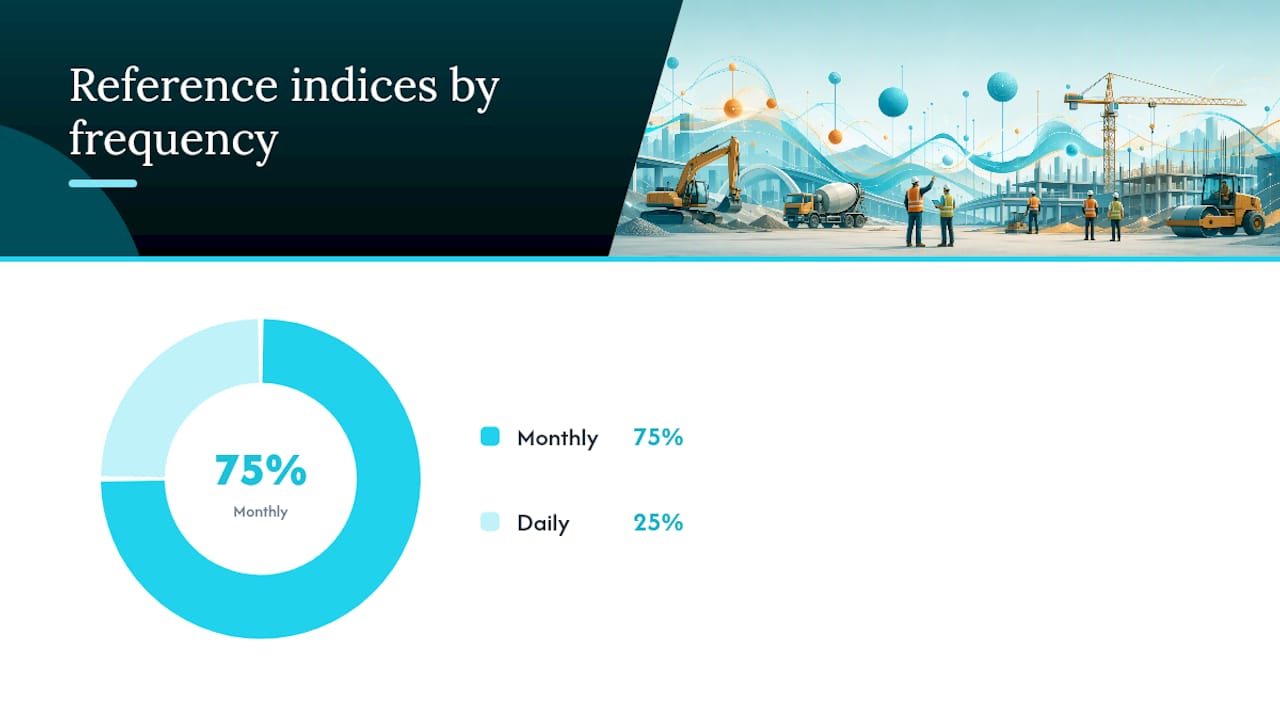
Reference index table:
| Index | Publisher | Frequency | Primary use case |
|---|---|---|---|
| PPI EIUIZ325 | BLS | Monthly | Chemical manufacturing contracts |
| WPU061 | BLS / FRED | Monthly | Chemicals and allied products, volatility analysis |
| IPEX | ICIS | Monthly | Petrochemical supply contracts |
| OPIS | Dow Jones | Daily | Fuel and logistics cost-plus programs |
Pro Tip: During negotiation, ask the seller to pull the index value for a specific date in the past six months and walk through the settlement math with you. If they cannot do it in five minutes using a public source, the index is not as transparent as they claim.
Worked scenarios from owner and contractor perspectives
Scenario 1: Homeowner, kitchen remodel
The fixed-price contractor has padded for unknowns behind the walls. The cost-plus contractor has not.
If the job goes smoothly, cost-plus wins by roughly $8,600. If the contractor finds a rotted subfloor and corroded plumbing, actual costs could hit $85,000, pushing the cost-plus total to $102,000 — above the fixed-price bid. The homeowner’s decision comes down to how much discovery risk they believe exists. Adding a GMP cap at $95,000 to the cost-plus contract captures the transparency benefit while capping the downside at the fixed-price level.
Lesson: A GMP cap on a cost-plus contract is not a concession — it is the structure that makes cost-plus work for owners.
Scenario 2: Industrial buyer, indexed chemical supply
A manufacturer sources 200 metric tons of a technical-grade solvent per month under a 24-month indexed contract. In month one, the index reads 205.0, producing a price of $214.23/MT and a monthly invoice of $42,846. By month 12, the index has risen to 221.0, pushing the price to $231.00/MT and the monthly invoice to $46,200.

A fixed-price alternative was offered at $225/MT for the full 24 months. The buyer would have overpaid in months 1–11 and underpaid in months 12–24. Over the full contract, the indexed approach saved approximately $18,000 relative to the fixed rate — but only because the index rose gradually rather than spiking.
Lesson: Indexed contracts reward buyers who can absorb volatility. If a single bad month would disrupt cash flow, negotiate a ceiling price.
Scenario 3: Contractor, older house renovation with unknowns
A contractor bids on a 1940s house renovation. The owner wants a fixed price; the contractor knows the electrical and plumbing are original and likely non-compliant.
Actual costs come in at $178,000 (fee: $39,160; total: $217,160 — but the GMP caps the owner’s payment at $210,000). The contractor absorbs the $7,160 overage. The contingency was not needed. The owner paid the GMP; the contractor learned to price the contingency more carefully next time.
Lesson: GMP contingencies protect the contractor as much as the owner — but only if they are sized to the actual risk, not padded to win the bid.
What contractors and owners actually decide in practice
The contract type that wins in mid-market projects is rarely the theoretically optimal one. It is the one both parties trust enough to sign.
Contractors on complex renovations often push for cost-plus because they have been burned by fixed-price bids on jobs with hidden conditions. The compromise that actually works is cost-plus with a GMP, a tightly written change-order clause, and monthly open-book reviews. Both parties have skin in the game; neither is flying blind.
For indexed chemical and logistics contracts, the failure mode is almost always the same: the index clause was vague, the lag was not specified, and the first settlement statement produced a number neither party expected. The fix is not a different contract type — it is better drafting. Specify the series ID, the lag, the averaging convention, and the fallback. Then run a sample settlement before the contract is signed so both parties know exactly how the math works.
What tends to fail in practice: open-ended cost-plus without audit rights, fixed-price bids on undefined scopes, and indexed contracts with proprietary benchmarks. What tends to work: GMP-capped cost-plus on complex projects, fixed-price on well-scoped repetitive work, and publicly indexed contracts with written settlement examples attached as exhibits.
How RJR Worldwide structures index-linked chemical supply contracts
If you are sourcing industrial chemicals and want pricing that tracks the market without the guesswork of a fixed forward rate, RJR Worldwide’s multi-year index-linked supply contracts are built around exactly the protections this guide describes: publicly verifiable indices (BLS PPI, ICIS/IPEX), written settlement formulas, full documentation for US and EU compliance, and dual-source supply from vetted manufacturers in China and India.
Every contract includes the index series ID, lag convention, and a sample settlement statement so buyers know the math before they sign. Food, technical, and pharmaceutical-grade chemicals are available under the same transparent framework. To request pricing, a sample contract, or a confidential sourcing discussion, contact RJR Worldwide directly — the team can walk through a live index lookup and settlement example for your specific product and volume.
Sources
- ICIS — IPEX methodology
- BLS — PPI series EIUIZ325 (chemical manufacturing)
- FRED — Producer price indexes for selected commodity groupings (chemicals and allied products)
- FAR Part 16.102 — Types of contracts
- Lexology — Cost plus and open book pricing: what to watch out for
This article provides general educational information about contract pricing structures. It is not legal or financial advice. Confirm contract terms and applicable regulations with a qualified attorney or procurement professional before signing.
This article is general information, not a substitute for advice from a qualified lawyer. Consult a qualified legal professional about your own circumstances before acting on anything here.