How U.S. Investors Avoid Bad FedEx Linehaul Deals in 90 Days With RJR
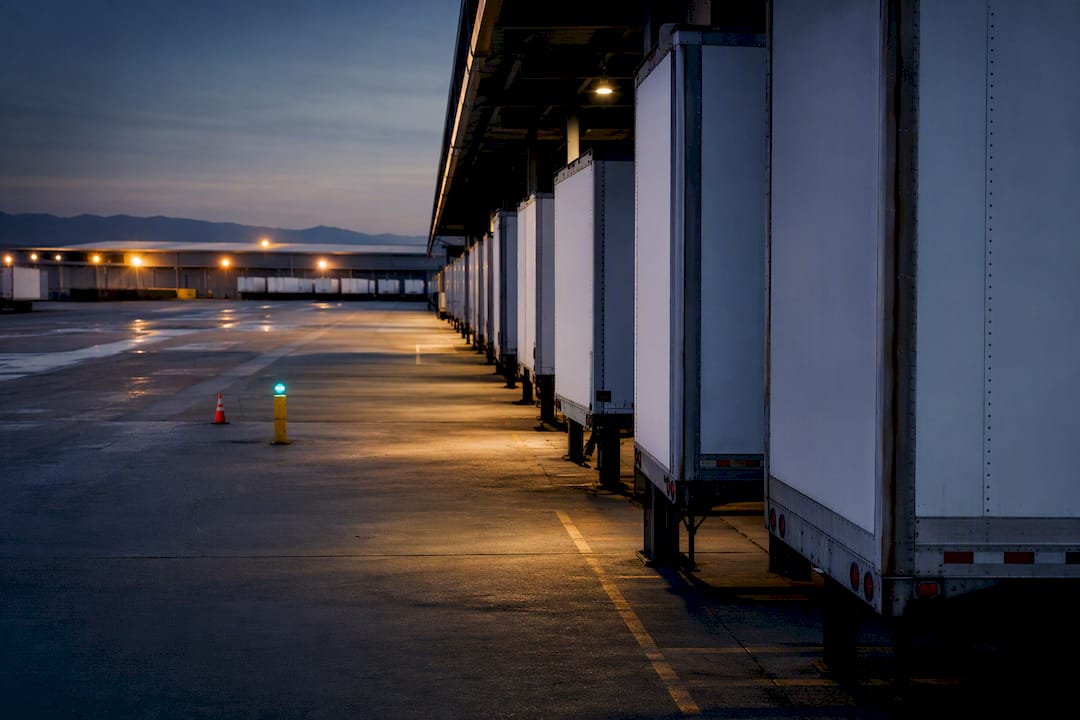
A FedEx linehaul acquisition can deliver strong, contracted cash flow for buyers who bring real capital, CDL-licensed drivers, and a disciplined safety program to the table. The right deal often pencils out; the wrong one buries an undercapitalized owner in fuel, insurance, and maintenance costs within a year. Everything below explains how to tell the two apart.
TL;DR:
- FedEx linehaul routes require significant upfront capital for trucks, drivers, and insurance, often making them suitable only for well-capitalized buyers.
- The value of a route depends on factors such as equipment condition, contract duration, safety record, lane stability, and whether real estate is included.
- Buyer qualification involves verifying the seller’s contract, reviewing detailed financial and equipment documentation, and completing a multi-step approval process.
- Due diligence must carefully examine financial statements, vehicle maintenance logs, safety records, and hiring practices to avoid inheriting hidden liabilities.
- Most deals are financed through a combination of seller financing and equipment loans, with a critical transition period of at least 90 days requiring careful operational planning.
Table of Contents
- What Makes a FedEx Linehaul Acquisition Different From Buying a P&D Route?
- Is Owning a FedEx Linehaul Route a Good Investment?
- How Much Does a FedEx Linehaul Route Sell For?
- How Do You Buy and Get Approved for a FedEx Linehaul Route?
- What Should You Check During Due Diligence on a Linehaul Route?
- How Do You Finance a FedEx Linehaul Route Purchase?
- What Happens in the First 90 Days After Closing?
- How Does RJR Worldwide Corp Support Linehaul Acquisitions?
- When Should You Buy a Linehaul Route, and When Should You Walk Away?
- How RJR Worldwide Supports Buyers of FedEx Linehaul Routes
- Sources
What Makes a FedEx Linehaul Acquisition Different From Buying a P&D Route?
Linehaul and pickup-and-delivery (P&D) routes are both part of the FedEx Ground independent service provider network, but they operate on opposite ends of the freight chain. P&D drivers run local stops with box trucks or vans. Linehaul carriers move fully loaded semi-trailers between distribution hubs, often overnight, on interstate corridors.
That structural difference is exactly why linehaul routes tend to sell at a premium over P&D routes. Higher volume per run and interstate reach translate into stronger revenue per mile, but the entry cost climbs with it.
- Equipment: Class 8 tractors and 53-foot trailers, versus box trucks for P&D
- Drivers: CDL-A licensed operators required, often with hazmat or team-driving experience
- Schedule: Overnight and early-morning runs instead of daytime delivery windows
- Revenue model: Fixed weekly settlement plus mileage and fuel surcharge components, rather than stop-count pricing
Staffing gets harder too. CDL-A drivers are scarcer and pricier than P&D delivery staff, and that labor cost shows up directly in your margin math.
Is Owning a FedEx Linehaul Route a Good Investment?
It depends heavily on your appetite for capital intensity versus your tolerance for a fairly predictable revenue stream. Linehaul carries real upside: branded demand from FedEx Ground, mileage-based economics that scale with more trucks, and a network that keeps growing with e-commerce volume. It also carries real risk that undercapitalized buyers routinely underestimate.
Upsides:
- Contracted, recurring revenue tied to a national brand rather than spot-market freight
- Per-mile and per-run economics that scale cleanly as you add tractors
- Established lanes with known volume, reducing the guesswork of building a customer base from zero
Downsides:
- High capital intensity, since trucks, drivers, and insurance all require substantial upfront investment
- Driver shortages that can strand a route if you lose even one or two CDL operators
- Contract renewal risk and fuel/insurance volatility that can erode thin margins fast
Red flags worth walking away from include a seller who cannot produce clean settlement statements, a fleet averaging past 500,000 miles with no recent overhaul records, or a route with a spotty on-time performance history.
Pro Tip: Ask the seller for 24 months of weekly settlement statements, not just an annual summary. Monthly volatility tells you more about real risk than a smoothed annual figure ever will.
How Much Does a FedEx Linehaul Route Sell For?
Pricing runs on seller’s discretionary earnings (SDE), the standard small-business valuation metric that adds back owner compensation and one-time expenses to net profit. Industry valuation reporting places most FedEx linehaul carriers within observable SDE multiple ranges, though the exact multiple swings based on a handful of concrete factors:
- Age and condition of the tractor and trailer fleet
- Remaining term on the FedEx contract
- DOT safety score and CSA violation history
- Route stability, including volume trends and lane consistency
- Whether the deal includes real estate or is trucks-and-contract only
Statistic callout: A route generating $400,000 in annual SDE with a clean safety record and newer equipment will command a materially higher offer than an identical-revenue route running 10-year-old tractors with open CSA violations, even before you touch the contract itself. Buyers should normalize seller SDE for owner perks and non-recurring items before comparing any two listings side by side.
How Do You Buy and Get Approved for a FedEx Linehaul Route?
FedEx does not let ownership change hands quietly. The approval process is deliberate, and skipping steps is the fastest way to lose a deal after you have already spent money on diligence.
- Verify the listing. Confirm the seller actually holds the contract in question; brokers occasionally list routes that are already under letter of intent elsewhere.
- Pre-LIM submission. Submit initial buyer qualification materials covering financial capacity and management background.
- LIM interview. FedEx evaluates your safety plan, operational management capability, and financial strength directly, based on documented Pre-LIM and LIM stages.
- Tractor file creation. Once approved, you build individual tractor files documenting titles, insurance, and DOT compliance for every vehicle in the fleet.
- Contract transfer and go-live. Decals, insurance certificates, and final paperwork close out before your first scheduled run under the new ownership.
Budget more time than you expect. Buyers who assume a 30-day close are almost always wrong; a multi-month runway to Pre-LIM through go-live is the realistic norm.
What Should You Check During Due Diligence on a Linehaul Route?
Diligence on a linehaul acquisition splits into three lanes: financial, equipment, and regulatory. Miss any one of them and you inherit someone else’s problem on day one.
- Financial: Reconcile SDE against bank statements, flag owner perks (personal vehicle leases, family payroll), and identify any non-recurring revenue bumps
- Equipment: Pull maintenance logs, verify titles are lien-free, and check whether trailers are owned or leased under a separate agreement
- Regulatory: Review DOT and CSA safety scores, insurance claims history, and confirm every driver’s CDL and medical certification is current
Hiring practices deserve a look too. Buyers inherit any existing staff, and maintaining compliant, non-discriminatory hiring and employment practices protects you from liability the seller may have left unaddressed.
Pro Tip: Request the actual insurance claims log, not just the current premium quote. A carrier with three claims in two years will see its premium jump the moment you take over, even if the seller’s current rate looks attractive.
How Do You Finance a FedEx Linehaul Route Purchase?
Most linehaul deals close using a blend of seller financing and equipment-secured debt rather than a single loan.
- Seller financing: Common because it signals confidence in the route’s future and often smooths FedEx’s transfer approval; expect terms in the three-to-five-year range with a meaningful down payment
- SBA 7(a) loans: Technically available, but harder to secure than brokers often suggest, since lenders want clean historical financials and a formal appraisal before committing
- Equipment financing: Tractors and trailers can often be financed separately from the business purchase itself, preserving cash for working capital
- Cash reserves: Keep a contingency fund beyond the purchase price. Fuel price swings and unplanned repairs hit hardest in the first 90 days
What Happens in the First 90 Days After Closing?
The transition window is where deals succeed or quietly fall apart. Cash flow gets tight fast if you are not prepared for it.
- Retain existing drivers where possible; recruiting CDL-A operators from scratch mid-transition is slow and expensive
- Keep the existing maintenance vendor relationship through at least one full service cycle before switching providers
- Budget for upfront payroll, fuel, and insurance deposits that hit before your first full settlement payment arrives
- Track on-time performance daily; a slip in the first weeks can trigger FedEx scrutiny during the contract renewal window
How Does RJR Worldwide Corp Support Linehaul Acquisitions?
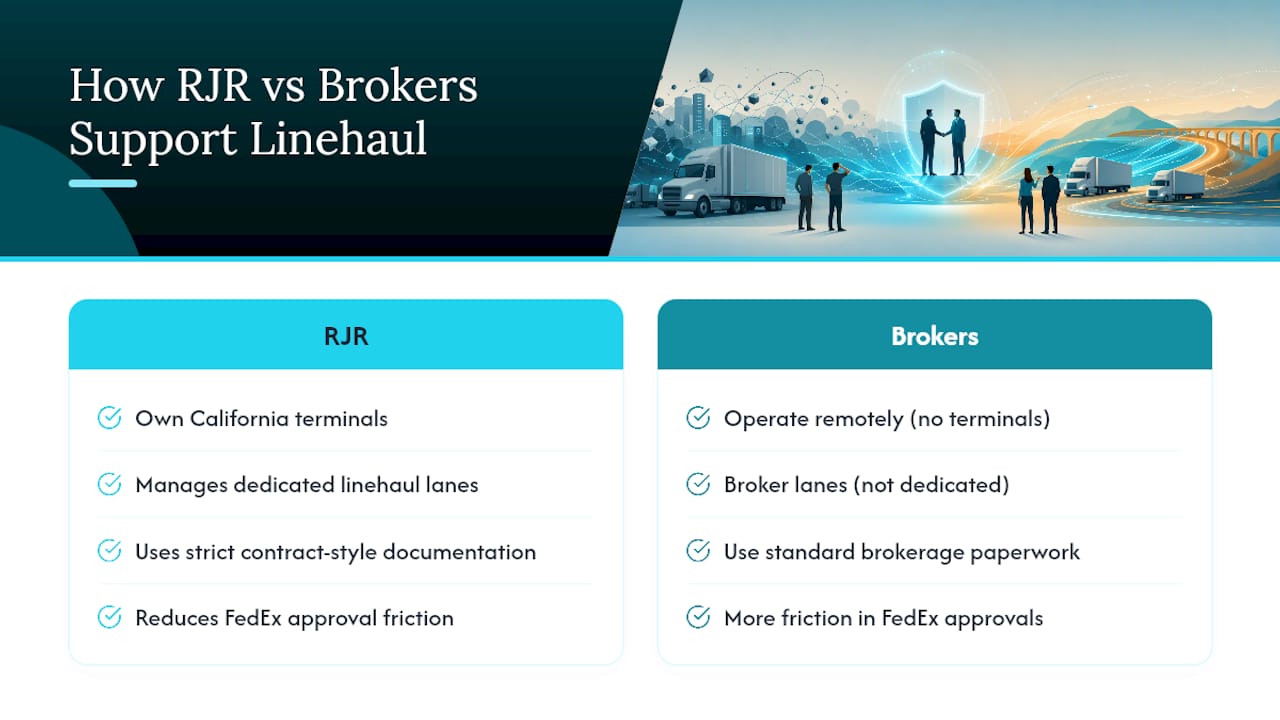
RJR Worldwide Corp operates directly from its own California terminals, managing dedicated linehaul lanes rather than brokering deals from a distance. That terminal presence matters during a transfer, since RJR applies the same documentation discipline it uses in its multi-year, index-linked chemical supply contracts to acquisition paperwork, reducing the friction that trips up first-time buyers during FedEx’s approval process.
When Should You Buy a Linehaul Route, and When Should You Walk Away?
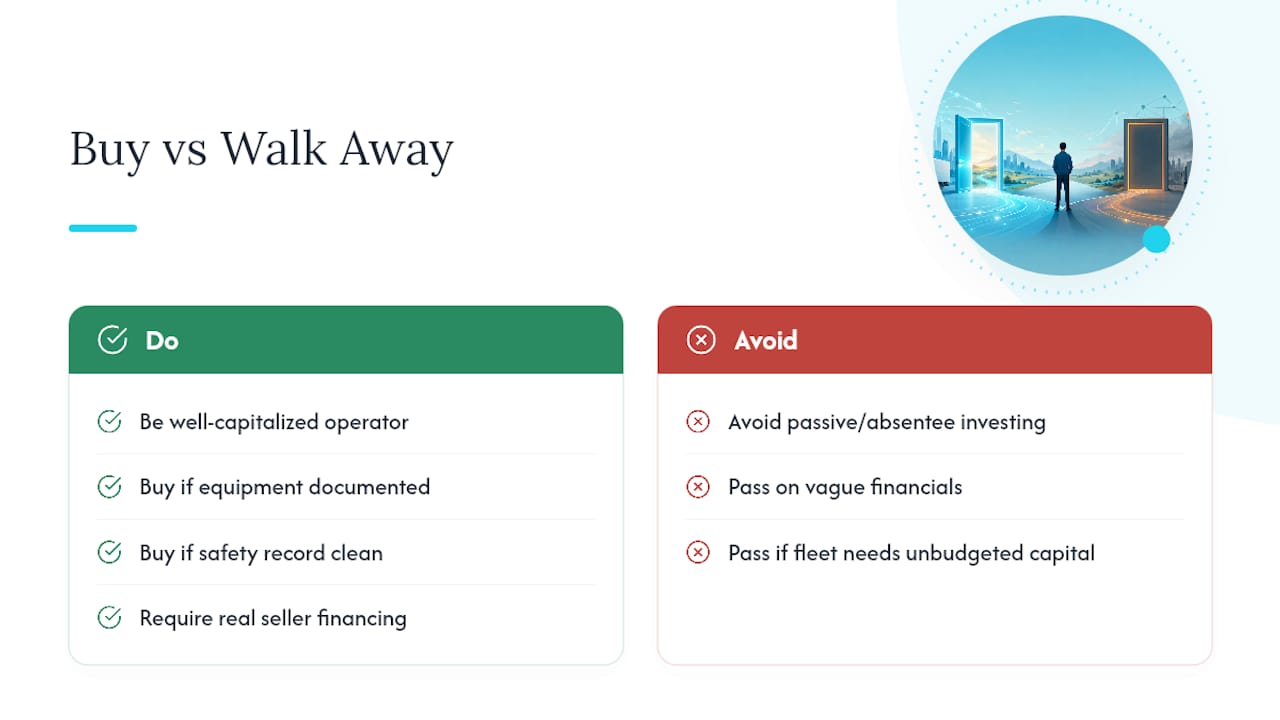
The strongest buyers are well-capitalized operators, not passive investors chasing a hands-off return. Owner-operators who can step into dispatch and safety oversight personally tend to outperform absentee buyers who rely entirely on inherited staff.
Pursue a deal when equipment is documented, the safety record is clean, and the seller offers real financing terms. Pass when financials are vague or the fleet needs immediate capital you have not budgeted. Build a small team before making an offer: an accountant who understands SDE normalization, a transportation attorney, and a mechanic who can inspect the fleet.
— RJR Worldwide
How RJR Worldwide Supports Buyers of FedEx Linehaul Routes
RJR Worldwide Corp acquires and operates FedEx linehaul businesses directly out of its Southern California terminals, which means the support you get comes from a team that runs these lanes daily, not a broker reading a listing sheet.
A confidential evaluation with RJR Worldwide Corp covers your target route’s financials, equipment condition, and safety record, and results in a clear read on whether the deal is worth pursuing before you spend money on formal diligence. For sellers, RJR handles integration directly, transferring a named safety manager and maintenance vendor during closing week to protect service levels through the FedEx contract renewal window. If you are weighing a FedEx linehaul acquisition or considering an exit from your own route, reach out for a confidential discussion and get a straight answer on where your numbers actually stand.
Sources
- Unpacking an Industry: FedEx Routes — Withum
- Before You Buy a FedEx Linehaul Route — Route Consultant