24.5% Export Drop: Port Congestion Risks for Chemicals and RJR Fixes
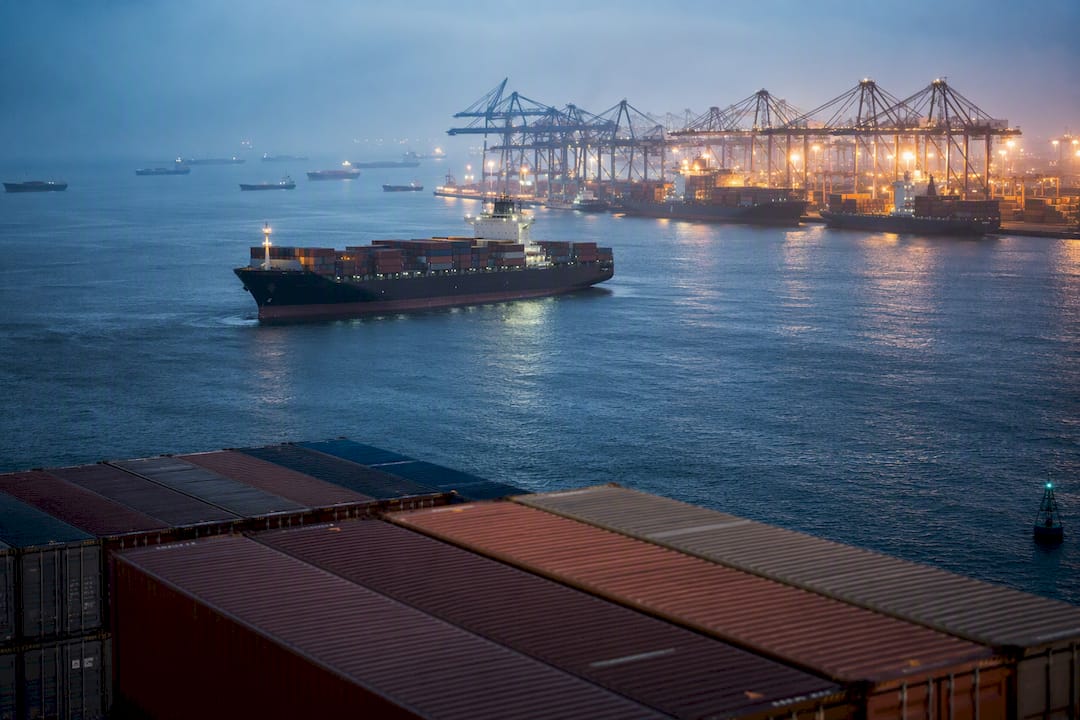
Port congestion is currently adding days to chemical lead times, pushing freight and demurrage costs higher, and cutting export volumes for some commodity chemicals. The damage runs from isotank shortages to outright hazmat rejections at the terminal gate. Two moves matter most right now: track leading indicators like vessel wait time and schedule reliability, and lock down critical equipment and contract terms before the next disruption hits. The sections below break down the metrics, causes, costs, and fixes in detail.
TL;DR:
- Vessel wait times and import dwell times are key early indicators; simultaneous increases signal potential lead-time disruptions.
- Factors like mega-ship arrivals, equipment shortages, and route diversions contribute to prolonged port congestion affecting chemical imports.
- Congestion leads to sharp freight rate spikes, higher demurrage and detention costs, and significant export value losses, especially during severe events.
- Locking in long-term, index-linked contracts and securing equipment beforehand can mitigate risks, while building contingency routing plans is crucial.
- Continuous KPI monitoring and proactive supplier agreements, especially with dedicated terminals, help chemical shippers minimize exposure during ongoing structural congestion risks.
Table of Contents
- How Do You Measure Port Congestion for Chemical Shipments?
- What Causes Port Congestion That Affects Chemical Cargo?
- How Does Port Congestion Disrupt Chemical Shipments Specifically?
- What Do Port Delays Cost the Chemical Trade?
- What Can Chemical Shippers Do to Reduce Congestion Risk?
- Which KPIs Should Chemical Logistics Teams Track Weekly?
- How Does RJR Worldwide Reduce Port Congestion Exposure for Chemical Buyers?
- Which Congestion Risks Are Temporary and Which Are Structural?
- Where Can You Track Port Congestion and Chemical Trade Data?
- Sources
- FAQ
How Do You Measure Port Congestion for Chemical Shipments?
Congestion isn’t a feeling, it’s a number, and chemical shippers who don’t track the right ones get blindsided. Vessel waiting time (how long a ship idles before it gets a berth) and import dwell time (how long a container sits at the terminal before pickup) are the two clearest early-warning signals for lead-time risk. When both climb at once, expect your inland delivery dates to slip regardless of what the ocean carrier’s schedule says.
Schedule reliability, tracked by firms like Sea-Intelligence, tells you how often carriers actually hit their published arrival windows. A drop in reliability combined with rising average delay days means your safety-stock math needs revisiting, not just your patience. Kpler’s measurement framework treats stranded TEU counts and berth queue length as the operational backbone for spotting congestion before it shows up in your delivery dates.
For chemical-specific exposure, watch these indicators closely:
- Berth queue length — number of vessels waiting offshore, a direct proxy for terminal saturation.
- Import dwell time — days between vessel discharge and container pickup or rail departure.
- Schedule reliability — percentage of sailings arriving within the carrier’s published window.
- Stranded TEU count — containers sitting idle at terminals or inland yards awaiting equipment or chassis.
- Isotank utilization rate — how much of the specialized tank fleet is available versus committed.
- Chassis availability — a quiet bottleneck that stalls container pickup even when the box is ready.
Set alert thresholds now, not after your isotank booking gets bumped.
What Causes Port Congestion That Affects Chemical Cargo?
Congestion rarely has one cause. It’s usually three or four factors compounding at once, and chemical shippers get hit from angles that dry-goods shippers barely notice.
- Volume surges and mega-ship bunching. When several ultra-large vessels arrive within days of each other, terminals can’t process the peak load, and berth queues stretch into weeks.
- Labor and gate throughput limits. Chassis shortages, rail ramp bottlenecks, and limited gate hours slow container evacuation even after a ship discharges.
- Weather disruption. Storm closures and fog delays stack directly onto existing queues, and recovery often takes longer than the original event.
- Chokepoint disruption and route diversion. Attacks and closures near the Red Sea and the Strait of Hormuz have forced vessels onto longer routes, adding 10 to 30 or more days to transit and triggering force majeure declarations that hit petrochemical feedstock flows particularly hard in Asia, where some plants depend on naphtha imports for the majority of their feedstock.
- Equipment imbalance. Container and isotank shortages, worsened by empty-box repositioning delays, leave chemical shippers competing for a shrinking pool of specialized capacity.
- Carrier commercial responses. Blank sailings and cargo prioritization decisions during congestion routinely push hazmat freight to the back of the line.
Each driver compounds the others. A chokepoint diversion that adds three weeks of transit also tightens equipment availability everywhere else in the network, which is exactly the kind of cascading effect chemical planners need to model rather than assume away.
How Does Port Congestion Disrupt Chemical Shipments Specifically?
Containerized polymer pellets, packaged resins, and drummed specialty chemicals face a different risk profile than liquid bulk moving in isotanks, and both get hit differently than a general cargo shipment would. Container-bound chemicals compete for the same box pool as every other commodity, so when equipment gets scarce, chemical shippers lose out to higher-margin or easier-to-handle freight. Isotank flows face a narrower problem: there simply aren’t enough specialized tanks to go around when demand spikes, and idle tanks stuck in a congested port can’t be redeployed elsewhere.
Hazmat classification adds a second layer of risk that most commodities never encounter. Carriers under space pressure often restrict or reject hazardous cargo outright to simplify vessel loading and reduce liability exposure. That’s not a hypothetical: ACC’s member survey found 47 to 55% of chemical manufacturers reported carriers restricting hazmat bookings during the worst congestion periods.
The operational fallout shows up in familiar, painful ways:
- Booking cancellations that force last-minute rebooking at premium rates.
- Export containers piling up at origin ports waiting for vessel space.
- Extended lead times that ripple into production scheduling and customer delivery commitments.
- Rising demurrage exposure on cargo stuck in the queue.
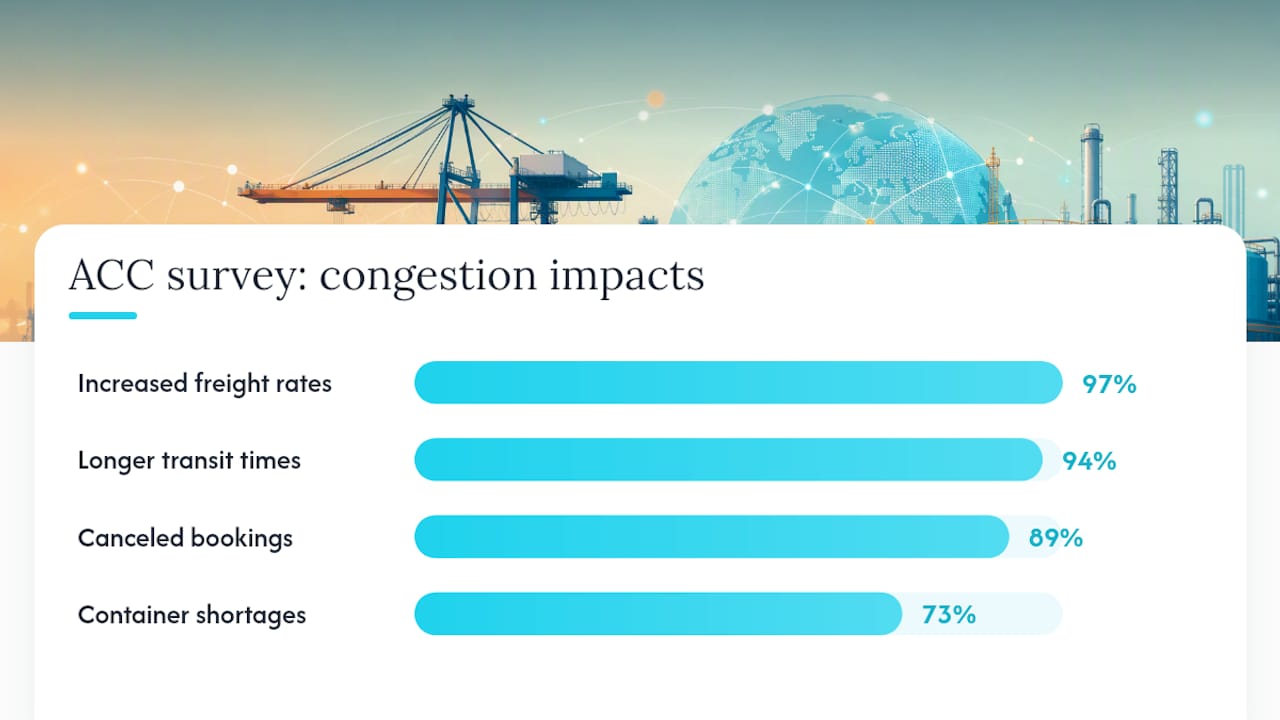
Statistic callout: In the same ACC survey, 97% of chemical manufacturers reported increased freight rates, 94% reported longer transit times, and 89% reported canceled bookings, with 73% citing outright container shortages. That’s not a minority of the industry dealing with an isolated problem. It’s the operational norm during acute congestion.
What Do Port Delays Cost the Chemical Trade?
Freight rates respond to congestion faster than almost anything else in the supply chain, and chemical shippers feel it on both container and tanker lanes. When schedule reliability drops and vessels bunch at anchorages, carriers pass the scarcity premium straight through to shippers, and headhaul container rates on affected lanes can spike sharply within weeks. Reporting from MaritimeBriefs has tracked exactly this pattern on Asia to U.S. lanes tied to East Asian terminal backups.
Demurrage and detention charges accrue independently of freight rates and often catch shippers off guard. Demurrage builds while a container sits at the terminal past its free time; detention builds once it leaves the port but hasn’t been returned empty. During severe congestion, both clocks run even when the delay is entirely the terminal’s fault, and whoever holds the bill depends on contract language negotiated long before the disruption started.
Diversion adds a third cost layer. Rerouting a shipment to an alternate port or switching to breakbulk to dodge a bottleneck means new drayage costs, transload handling fees, and often a new set of customs paperwork.
The trade-level damage is documented, not speculative. A peer-reviewed event study found U.S. containerized exports fell 24.5% between May and November 2021, amounting to roughly $15.7 billion in lost export value, with chemical products among the hardest-hit commodity groups.
Cost exposure typically stacks in this order:
- Freight rate premiums on constrained lanes.
- Demurrage and detention accrual during dwell delays.
- Diversion and transload costs when switching ports or modes.
- Insurance adjustments tied to extended transit risk and cargo value exposure.
What Can Chemical Shippers Do to Reduce Congestion Risk?
Reacting to congestion after it hits your booking is too late. The leverage is in the contract and equipment decisions made months earlier.
- Lock in multi-year agreements with index-linked pricing. Contracts of affreightment and long-term supply deals with pricing tied to a published index absorb rate volatility instead of passing every spike straight to your bottom line.
- Write explicit demurrage and force-majeure terms into contracts. Reservation windows for isotanks, demurrage caps tied to validated terminal dwell data, and supplier notification clauses for force-majeure events cut down on disputes when congestion actually hits, a lesson RJR Worldwide’s own work on transition service agreements applies directly to logistics contracting.
- Build a routing playbook before you need it. Identify alternate ports, breakbulk options, and inland waterway or rail alternatives now, not during a crisis, since breakbulk conversion bypasses container terminal bottlenecks entirely, though it adds handling complexity.
- Secure equipment early. Reserve isotank capacity ahead of peak season, and explore pooled tank arrangements or chassis partnerships to avoid competing for scarce equipment at the worst possible moment.
- Set inventory and allocation rules in advance. Define safety-stock triggers tied to schedule reliability drops, and decide allocation priority across product lines before a shortage forces the decision under pressure.
Pro Tip: *Model delay distributions, not just average delays.
Breakbulk conversion makes sense when isotank or container availability disappears entirely on a lane, but weigh the added handling labor and longer port-to-plant transit against the alternative of simply waiting out the congestion.
Which KPIs Should Chemical Logistics Teams Track Weekly?
A minimal dashboard beats an elaborate one nobody checks. Track berth queue length, import dwell time, schedule reliability, isotank utilization, stranded TEU count, and hazmat acceptance rate on a weekly cadence, pulling from AIS-based tracking feeds and carrier performance reports.
- Green zone: schedule reliability above 70%, dwell under three days. Continue normal booking cadence.
- Yellow zone: reliability between 50 and 70%, or dwell of three to five days. Begin securing alternate equipment and flag affected production lines.
- Red zone: reliability below 50%, dwell exceeding five days, or any hazmat restriction notice from your carrier. Invoke contract remedies, divert to backup routing, or buy spot capacity immediately.
How Does RJR Worldwide Reduce Port Congestion Exposure for Chemical Buyers?
Some supply chain operators run dedicated freight lanes out of California terminals rather than brokering through a chain of intermediaries, which cuts out a layer of scheduling uncertainty that typically compounds during congestion. Multi-year supplier agreements with index-linked pricing can give buyers rate predictability instead of spot-market whiplash, and full compliance documentation helps avoid customs delays that pile onto an already backed-up terminal queue.
When evaluating any supplier’s resilience to congestion, procurement teams should consider factors such as:
- Direct terminal access or dedicated lane agreements rather than solely third-party brokerage.
- Multi-year contracts with transparent, index-linked pricing.
- Complete compliance and customs documentation delivered proactively.
- Clear contacts for force-majeure and demurrage dispute resolution.
Which Congestion Risks Are Temporary and Which Are Structural?
Some of what’s driving today’s delays will fade. Weather events and short-term volume surges resolve themselves within a quarter or two. Chokepoint risk and equipment imbalance won’t. Route diversions around contested waters have become a recurring feature of global shipping, not an anomaly, and isotank scarcity tracks capital investment cycles that move far slower than any single congestion event.
Prioritize three things this quarter: build your KPI monitoring dashboard, lock down isotank capacity and demurrage contract language before your next renewal, and draft a contingency routing plan you can execute without a committee meeting. Treat the geopolitical and equipment risks as structural. Plan your contracts accordingly.
— RJR Worldwide
Where Can You Track Port Congestion and Chemical Trade Data?
- ACC’s member supply chain survey quantifies real-world impact reported directly by chemical manufacturers.
- The Steinbach event study gives peer-reviewed trade-volume and export-loss figures.
- Kpler’s congestion guide explains the operational metrics worth tracking weekly.
- C&EN’s chokepoint reporting tracks force-majeure and feedstock disruption in real time.
Ready to reduce your exposure to the next congestion spike? RJR Worldwide’s chemical sourcing catalog covers Sodium Metabisulfite, Xanthan Gum, Bio Glass, and Calcium Hypochlorite through multi-year, index-linked contracts with full compliance documentation, sourced from vetted suppliers across China and India. Review the chemical sourcing division to see how dual-country sourcing and dedicated California terminal operations keep your supply moving when ports don’t cooperate. For teams managing hazmat documentation through mode switches, labeling and documentation practices also deserve a review before congestion forces a rushed transload.
Sources
- Port congestion, container shortages, and U.S. foreign trade (S. Steinbach, Economics Letters)
- Supply Chain and Freight Transportation Problems Escalated for Chemical Manufacturers (ACC member survey)
- Port congestion: A guide to measurement, impact & management (Kpler)
- Strait of Hormuz closure hits Asia’s petrochemical supply chains (C&EN / Chemical & Engineering News)
FAQ
What Is Considered Severe Port Congestion for Chemical Cargo?
At that level, most chemical manufacturers report worsening delays and carrier rate increases, not an isolated few.
Why Do Carriers Reject Hazmat Shipments During Congestion?
Carriers restrict hazardous cargo bookings when vessel space gets tight because hazmat handling adds regulatory complexity and liability exposure compared to general cargo. Nearly half of chemical manufacturers surveyed reported this exact restriction during peak congestion periods.
How Much Have Chemical Exports Dropped Due to Port Congestion?
A peer-reviewed study found U.S. containerized exports fell 24.5% between May and November 2021, a loss of roughly $15.7 billion, with chemical products among the hardest-hit sectors. That figure reflects one severe congestion episode, not a permanent baseline.
What Is the Difference Between Demurrage and Detention Charges?
Demurrage accrues while a container sits at the port terminal past its free time allowance, while detention accrues after the container leaves the terminal but hasn’t been returned empty. Both can pile up fast during congestion regardless of who caused the delay, which is why contract language defining responsibility matters.
Should Chemical Shippers Switch to Breakbulk During Congestion?
Breakbulk makes sense when isotank or container capacity disappears entirely on a critical lane, since it bypasses container terminal bottlenecks that stall containerized freight. The tradeoff is added handling labor and typically longer port-to-plant transit time.