Pay 8% More to Avoid Delays in Pharmaceutical Grade Chemical Sourcing
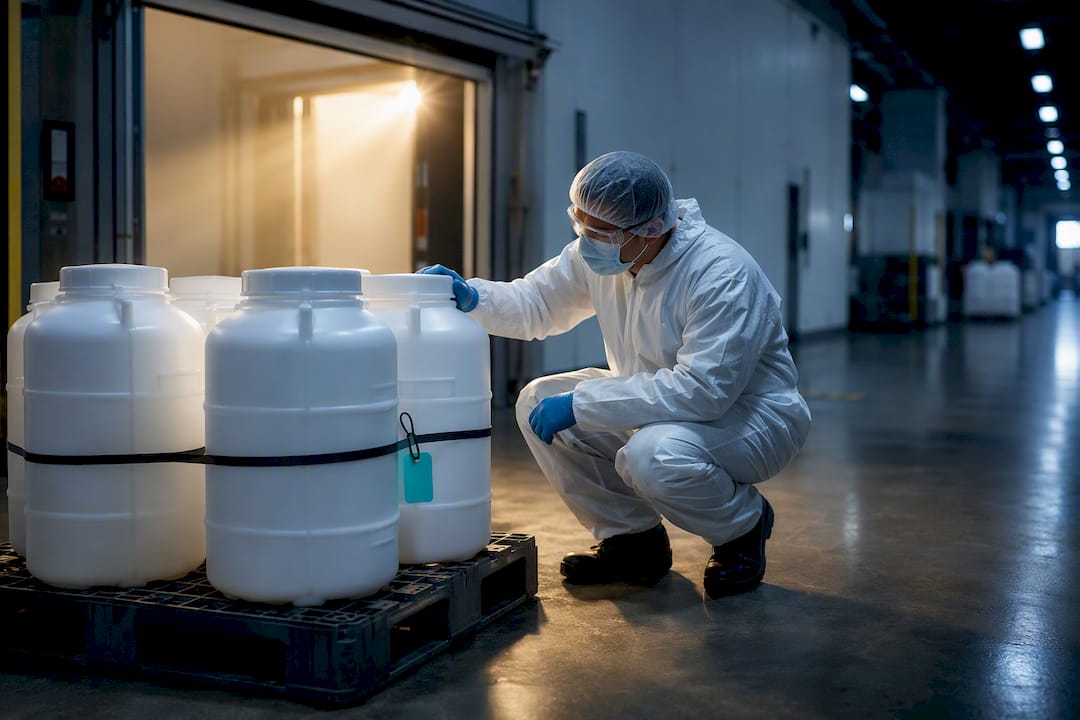
Pharmaceutical grade chemical sourcing means buying materials specified to pharmacopeial or GMP criteria, and only from suppliers who can produce audit-grade documentation on demand. That means a Certificate of Analysis matching your spec, a dossier (DMF, CEP, or ASMF) your regulatory team can actually access, current GMP or IPEC-PQG certification, and a signed Quality Agreement before the first commercial lot ships. Everything below shows how to verify each piece and build supply continuity around it.
TL;DR:
- Suppliers should provide actual test results on Certificates of Analysis, including lot numbers, dates, and raw data if results seem unusually perfect.
- Document access such as DMFs or CEPs is crucial for regulatory review, requiring formal authorization, and third-party GMP certifications help narrow supplier options.
- Qualification must be a multi-step process involving initial documentation review, risk-based audits, and inspection history analysis, not a single audit.
- Building a reliable supply chain requires multi-year, index-linked pricing agreements, backup suppliers for critical materials, and proper storage conditions to prevent degradation.
- Focus procurement efforts on comprehensive documentation and audit readiness rather than just price or purity spec to ensure consistent, compliant sourcing.
Table of Contents
- What Pharmaceutical Grade Means: Standards and Specification Checks
- Which Documents and Certificates Should Procurement Require?
- How Do You Qualify a Supplier Before the First Order?
- Building a Sourcing Strategy That Survives a Supply Shock
- What Should Your RFQ and First-Order Checklist Include?
- How RJR Worldwide Corp Supports Compliance-Ready Sourcing
- Handling and Storage Requirements to Maintain Chemical Integrity After Sourcing
- Common Regulatory Pitfalls and How to Avoid Non-Compliant Suppliers
- Typical Cost and Lead Time Considerations to Plan Around
- Contract Terms and Conditions That Actually Protect Your Supply
- Why Procurement Should Lead With Audit Readiness, Not Price Lists
- Ready to Discuss Your Pharmaceutical Grade Sourcing Needs?
- Sources
What Pharmaceutical Grade Means: Standards and Specification Checks
“Pharmaceutical grade” isn’t a single legal threshold. It’s shorthand for material that meets a pharmacopeial monograph, like United States Pharmacopeia (USP) or National Formulary standards, the European Pharmacopoeia, or the Japanese Pharmacopoeia, and is manufactured under a quality system that can prove it. USP monographs define identity tests, assay ranges, and impurity limits that most US drug filings reference directly. For active pharmaceutical ingredients, ICH Q7 sets the GMP framework manufacturers must follow, covering everything from equipment qualification to change control. Excipients and processing chemicals don’t always carry a monograph, which is exactly where GMP-based quality systems fill the gap.
When you write a specification, these are the line items that actually separate compliant material from something merely labeled “high purity”:
- Assay percentage and identity confirmation method
- Impurity profile, including specified and unspecified impurities
- Residual solvent limits, particularly for Class 1 and Class 2 solvents
- Heavy metal and elemental impurity limits
- Bacterial endotoxin limits for injectable-grade materials
- Container closure and packaging integrity requirements
Skip any of these on a spec sheet, and you’re trusting the supplier’s judgment instead of your own.
Which Documents and Certificates Should Procurement Require?
A Certificate of Analysis should list actual test results against your specification, not just “meets spec” with no numbers. Real red flags: missing lot numbers, undated signatures, or a CoA that mirrors the pharmacopeial monograph word for word instead of showing the supplier’s own batch data. If the numbers look suspiciously perfect across multiple lots, ask for raw analytical data.
Dossier access matters more than most buyers realize early in a relationship. A Drug Master File, Certificate of Suitability, or Active Substance Master File lets your regulatory affairs team review manufacturing detail without the supplier handing you their trade secrets directly. You’ll need a formal Letter of Authorization before the FDA or your notified body will let you cross-reference that file in your own submission.
Third-party certifications add a layer procurement can verify without an on-site visit. EXCiPACT certifies excipient suppliers against GMP and good distribution practice standards, and IPEC-PQG audits align with the same intent for excipient-specific quality systems. Neither certification replaces your own audit, but both narrow the pool fast.
Pro Tip: Ask every shortlisted supplier for their change-notification policy in writing before you request a quote. A supplier who can’t explain how they’ll tell you about a raw material or process change is telling you something about how they’ll handle the next one.
One data point worth remembering: a risk-tiered documentation approach that matches dossier depth to material criticality, rather than demanding maximum paperwork on every SKU, cuts qualification workload without cutting rigor.
How Do You Qualify a Supplier Before the First Order?
Qualification isn’t a single audit. It’s a sequence, and skipping steps to save two weeks usually costs you two months later.
- Request the baseline package first. GMP certificate, EXCiPACT or IPEC-PQG certification if applicable, recent CoAs for the exact grade you need, and a summary of their regulatory inspection history.
- Negotiate the Quality Agreement before pricing, not after. A Quality Agreement should spell out change notification timelines, sample retention periods, deviation reporting, and who owns stability data.
- Choose your audit depth based on risk. A desk review covering documentation and certificates works for low-risk excipients. Remote audits with live video walkthroughs handle mid-tier risk. Reserve on-site audits for APIs, injectable-grade materials, or any supplier with a spotty inspection history.
- Pull inspection history directly. FDA Form 483 observations aren’t automatically disqualifying. A supplier who received a 483 for a documentation gap and closed it within 30 days looks very different from one with repeat observations on the same system.
- Escalate when the paper trail contradicts the interview. If the QA contact can’t explain their own deviation process, that’s a bigger warning sign than the 483 itself.
Guidance from supplier qualification frameworks built for additive procurement applies just as directly here: front-load the verification work, because retroactive qualification after a batch failure is far more expensive.
Building a Sourcing Strategy That Survives a Supply Shock
Domestic and nearshore suppliers usually cost more per unit but cut lead time and reduce the paperwork burden around import documentation. Global suppliers, particularly in China and India, often deliver lower landed cost and deeper manufacturing capacity, but only pay off when the sourcing relationship includes real audit access and enforceable quality terms, not just a lower quote.
Lead times for pharmaceutical grade material typically run longer than industrial grade equivalents because batch release testing and documentation review add real days to the schedule. Reserve production slots ahead of your actual need date, especially for materials with limited qualified manufacturing sites.
A few contractual and operational levers reduce the risk of a single point of failure:
- Multi-year, index-linked pricing agreements that avoid renegotiating terms every time a market shifts
- A qualified backup supplier for any material with fewer than two approved sources
- Safety stock sized to cover the longer of transit time or requalification time, not just average lead time
- Documented export verification and on-site checks for any supplier discovered through a digital marketplace rather than direct relationship
Hazardous or temperature-sensitive materials add another layer. Confirm your logistics partner understands DOT and IATA classification requirements before the first shipment, not after a carrier rejects a load at the dock.
What Should Your RFQ and First-Order Checklist Include?
A weak RFQ is where most supply problems start. Build yours around these minimum fields before you send it to a single supplier:
- Full specification, including test methods and acceptance criteria, not just a grade name
- Required documentation: CoA format, dossier type needed (DMF, CEP, or ASMF), and Letter of Authorization terms
- Packaging, labeling, and shelf-life requirements specific to your storage conditions
- Lead time from order confirmation to delivery, including batch release testing time
- Minimum order quantity and pricing structure, including whether pricing is index-linked
For the first order itself, run independent sample testing against your spec rather than trusting the incoming CoA alone, cross-check the CoA batch number against the physical shipment, and confirm your transport plan and escalation contacts before the truck leaves the origin facility. A simple scoring matrix, weighting documentation completeness, audit findings, and lead-time reliability, makes shortlisting multiple suppliers faster than comparing quotes in isolation.
How RJR Worldwide Corp Supports Compliance-Ready Sourcing
Procurement teams don’t just need a lower price. They need a supplier relationship that survives an audit, a customs delay, or a sudden volume spike without falling apart.
- Direct operation from California terminals with dedicated lanes, which shortens the logistics chain between vetted overseas manufacturers and your dock
- Long-term agreements with vetted suppliers in China and India, structured around documented compliance with US and EU standards rather than one-off spot buys
- Index-linked, multi-year pricing paired with full documentation, so your team isn’t renegotiating terms and chasing paperwork every quarter
- Technical resources, including a USP grade compliance checklist, built for QA teams running their own audit prep
Working directly with a supplier that manages both sourcing and freight removes one of the more common failure points: a chemical that passes qualification but arrives late or damaged because logistics was someone else’s problem.
Handling and Storage Requirements to Maintain Chemical Integrity After Sourcing
Passing incoming inspection means nothing if the material degrades in your own warehouse. Every pharmaceutical grade chemical carries storage conditions tied directly to its stability data, and those conditions rarely match generic warehouse defaults.
Temperature control is the most common failure point. Materials specified for storage between 2°C and 8°C need continuous monitoring with logged data, not a thermostat someone checks once a shift. Humidity-sensitive powders and hygroscopic compounds require desiccant packaging and, in many cases, nitrogen-purged containers to prevent moisture uptake that alters assay results before you even open the drum.

Light-sensitive APIs and intermediates need opaque or amber packaging maintained through every internal transfer, not just during shipping. Once a technician moves material into a clear secondary container under fluorescent lighting, the clock on degradation starts regardless of what the original packaging protected against.
Segregation matters as much as environmental control. Store oxidizers away from combustible materials, keep incompatible chemical classes on separate shelving with physical barriers, and maintain a current safety data sheet library accessible to every person handling the material, not filed away in a system nobody checks during a shift change.
Batch traceability doesn’t stop at receiving. Log every environmental excursion, every container opening, and every partial-use event against the batch number, because a quality investigation six months later will need that chain intact. A chemical that meets every pharmacopeial standard on arrival can fail a stability re-test simply because storage records couldn’t prove the excursion-free conditions your original qualification assumed.
Common Regulatory Pitfalls and How to Avoid Non-Compliant Suppliers
The most expensive mistake in pharmaceutical grade chemical sourcing is treating a GMP certificate as proof of ongoing compliance rather than a snapshot from an audit date that may be a year or more in the past. Certificates lapse, scopes change, and a supplier certified for one product line isn’t automatically certified for another they add later.
Digital marketplaces and sourcing platforms have made supplier discovery faster, but discovery isn’t qualification. A listing that displays dossier availability or a verification badge still needs independent confirmation, particularly when sourcing critical intermediates from emerging markets where regulatory enforcement and documentation practices vary widely between regions and even between facilities of the same company.
Watch for suppliers who resist sharing their FDA Form 483 history or who explain every observation as a “misunderstanding” rather than describing what they actually changed. A pattern of repeat observations across multiple inspections, especially on the same quality system element, signals a structural problem, not bad luck.
Another frequent pitfall: accepting a CoA from a distributor without confirming who actually manufactured the material. Multi-tier distribution chains can obscure the real manufacturing site, which becomes a serious problem if that site later shows up on an import alert. Always trace the chain of custody back to the originating facility, and build that requirement directly into your Quality Agreement rather than assuming distributors will volunteer it.
Typical Cost and Lead Time Considerations to Plan Around
Pharmaceutical grade material almost always costs more than its industrial or technical grade equivalent from the same base chemistry, sometimes substantially more, because the price reflects testing overhead, documentation, and the manufacturing controls required to hit tighter impurity limits consistently, batch after batch.
Lead time is where budgets and schedules actually break. Between order placement and delivery, expect time for production scheduling, batch manufacturing, in-process testing, final release testing, documentation preparation, and transit. For materials sourced internationally, add customs clearance and any import-specific testing your facility requires before the material clears quarantine status internally.
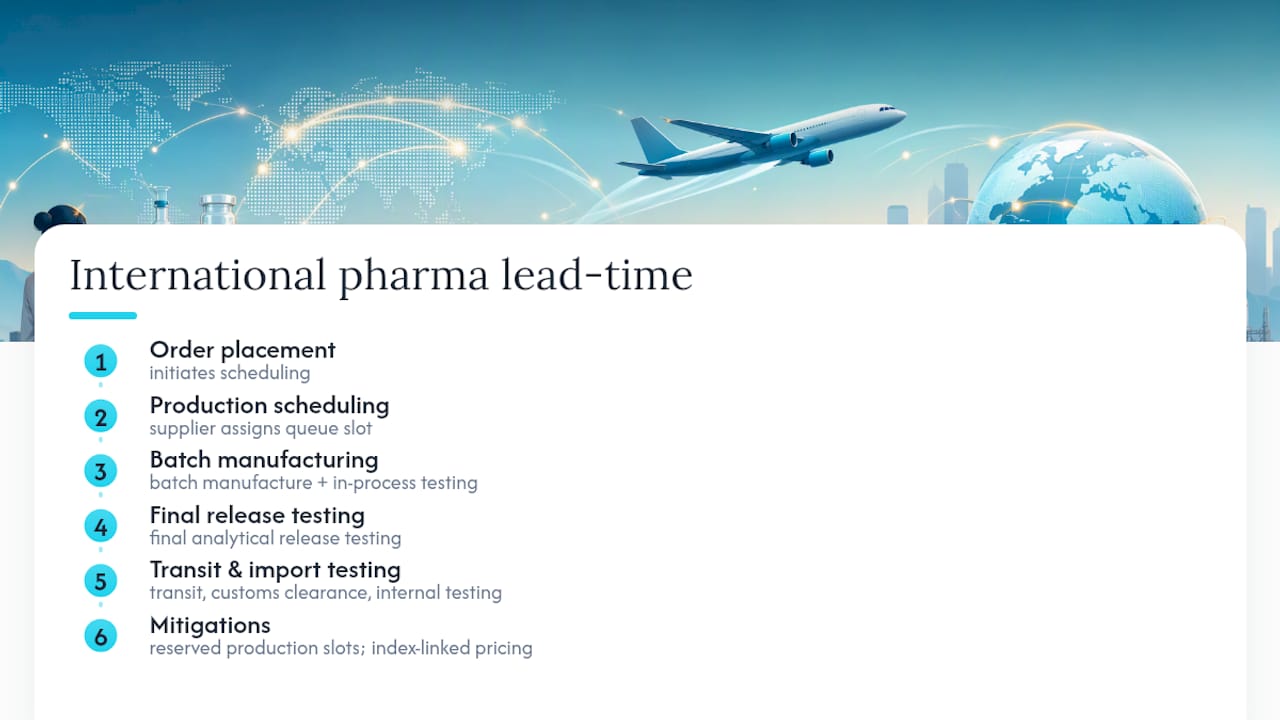
Rush orders exist, but they usually mean paying a premium to jump a supplier’s production queue rather than any genuine acceleration of testing time. Testing timelines are largely fixed by method and can’t be meaningfully compressed without cutting a step you’ll regret during your next audit.
Multi-year, index-linked pricing agreements solve a different problem than lead time: price volatility. Locking pricing to a published index rather than renegotiating from scratch every cycle protects both sides from the kind of surprise swings that have hit raw material markets repeatedly over the past several years. Pair that pricing structure with reserved production slots at the supplier level, and you convert an unpredictable lead time into a scheduled one, which is really what procurement is trying to buy in the first place.
Contract Terms and Conditions That Actually Protect Your Supply
A price sheet is not a contract, and too many procurement teams treat pharmaceutical grade chemical purchasing like a commodity buy when the terms need to function more like a long-term partnership agreement.
Specification lock-in belongs at the top. The contract should reference your exact spec document by version number, not a general grade description, and should require written notice before any change to manufacturing site, process, or raw material source that could affect that spec.
Change control and notification timelines need actual numbers attached, not vague language like “reasonable notice.” Specify how many days before a process change the supplier must notify you, and what documentation they owe you to support your own change assessment.
Liability and remediation terms matter more with pharmaceutical materials than almost any other category, because a failed batch downstream can trigger a recall, not just a return. Define what happens if delivered material fails your incoming testing against the contracted spec, including replacement timelines and cost responsibility.
Include audit rights explicitly, with defined notice periods for both scheduled and for-cause audits. A supplier who agrees verbally to “open access anytime” but won’t put audit rights in writing is giving you a promise, not a contractual guarantee.
Finally, address supply continuity directly: minimum inventory commitments, force majeure definitions specific to regulatory disruptions, and exit terms that don’t leave you scrambling if the relationship ends. None of this is exciting to negotiate. All of it is cheaper than the alternative.
Why Procurement Should Lead With Audit Readiness, Not Price Lists
Most sourcing guides rank suppliers by price and purity spec, as if pharmaceutical grade chemical sourcing were a shopping decision. It isn’t. It’s a risk management decision, and the teams that treat it that way consistently avoid the six-month delays that show up when a supplier can’t produce dossier data on request.
The conventional advice, get three quotes and compare CoAs, misses where the real risk sits. A CoA tells you about one batch. A Quality Agreement, an accessible dossier, and a clean inspection history tell you what happens on batch fifty, when the process has drifted slightly and you need a supplier who’ll tell you before you find out the hard way.
If you take one thing from this, prioritize documentation infrastructure over unit price on your shortlist. A supplier charging 8% more who hands you a complete dossier package and signs a real Quality Agreement on day one will cost you less over three years than the cheaper option that makes you chase paperwork every quarter. Supply continuity isn’t a nice-to-have clause buried in section twelve of a contract. It’s the entire point of sourcing pharmaceutical grade material from a partner instead of a vendor.
Ready to Discuss Your Pharmaceutical Grade Sourcing Needs?
If you’ve made it this far, you already know the real work in pharmaceutical grade chemical sourcing happens before the purchase order, not after. RJR Worldwide Corp runs multi-year, index-linked supply agreements with vetted suppliers in China and India, backed by full documentation and direct logistics through our own California terminals, so your team gets dossier access and audit-ready paperwork instead of a distributor’s shrug when the FDA asks a question.
Before you reach out, pull together your target specification, any dossier requirements your regulatory team has flagged, and the volume range you’re planning to contract. That’s enough for a real conversation, not a generic quote. Visit our Chemical Sourcing Division to see the grades and chemistries we currently supply, or go straight to our contact page to request pricing, a sample, or a confidential discussion about a draft Quality Agreement before you commit to a first order.
Sources
- United States Pharmacopeia (USP)
- EXCiPACT — The certification scheme
- Emprove® Chemicals — Merck/Sigma-Aldrich
- Quality agreement explained — Qualityze